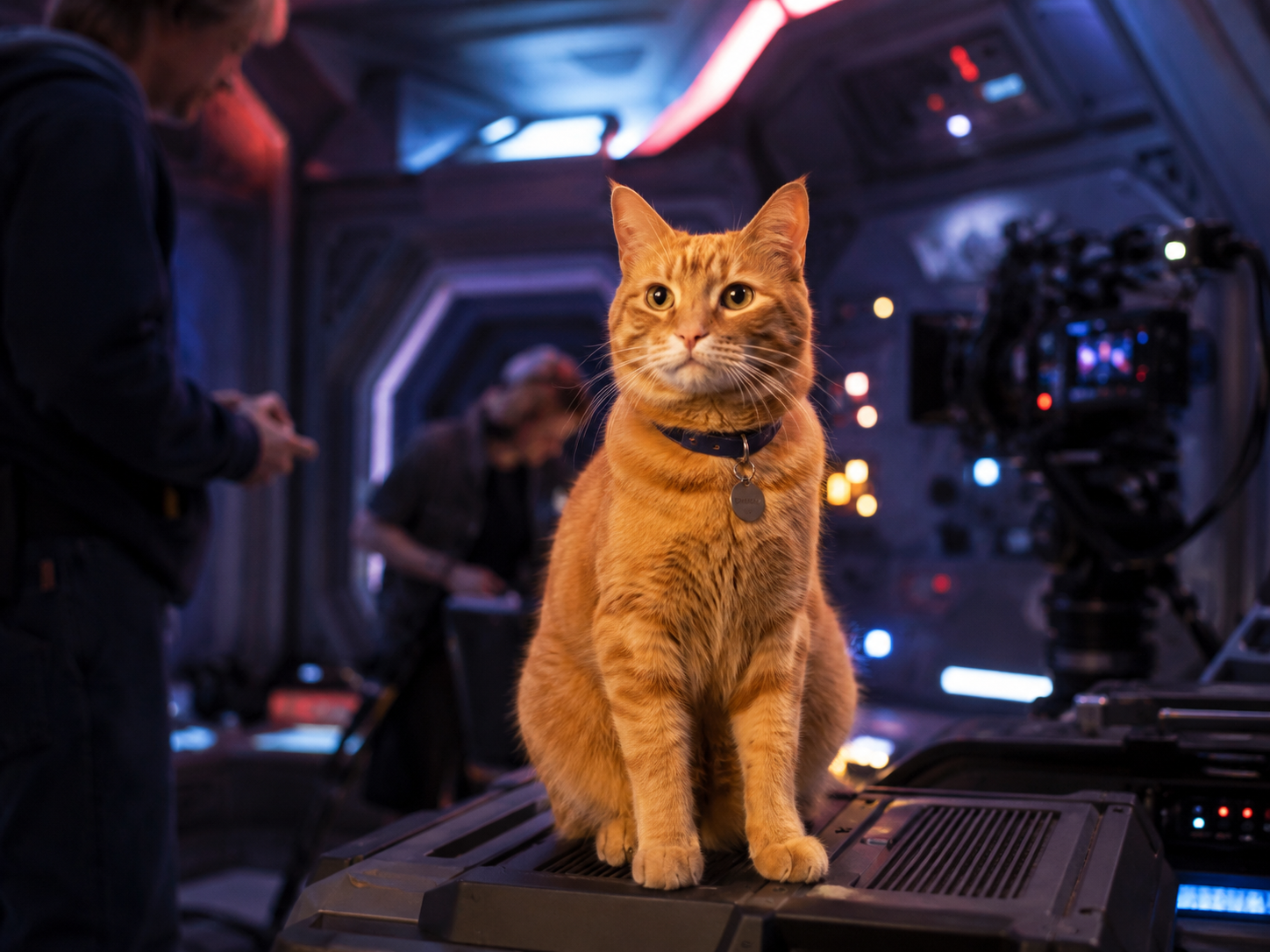
Dogs may have a reputation for being easier to train, but Hollywood has never been short on feline stars.
Cats have appeared as everything from background pets to major characters—and modern productions can train cats to perform considerably more complicated actions than many viewers realize.
Sassy in Homeward Bound
One of the most famous movie cats of the 1990s was Sassy, the Himalayan cat from Disney’s Homeward Bound: The Incredible Journey.
On screen, audiences saw Sassy travelling across the wilderness alongside Shadow and Chance.
Behind the scenes, things were considerably more complicated.
Disney’s D23 reports that the three principal animals trained for up to seven weeks before filming began.
And Sassy wasn’t actually one cat.
Ten different cats played Sassy, while four dogs each were used for Shadow and Chance. Different animals could therefore perform specialized actions while allowing others to rest.
It’s a perfect example of how filmmaking creates the illusion of one seamless animal performance.
Goose in Captain Marvel
Marvel fans will also recognize Goose, the cat appearing alongside Brie Larson in Captain Marvel.
American Humane’s production report describes trainers rehearsing scenes in stages before filming. A trainer used clicker training to encourage a cat to travel between predetermined points during one hallway sequence.
To the audience, Goose simply appears to walk naturally through the scene.
Behind the camera, that little movement has been intentionally trained.
Frodo in A Quiet Place: Day One
A more recent example demonstrates just how much can be accomplished with trained cats.
In A Quiet Place: Day One, Frodo accompanies Lupita Nyong’o’s character through a chaotic alien invasion.
American Humane’s detailed production report describes cats being trained to:
- Walk while wearing a harness
- Travel between predetermined marks
- Jump from an actor’s arms
- Enter a bag on cue
- Run toward a trainer
- Follow clicker and buzzer cues
For dangerous-looking sequences, filmmakers substituted fake cats or controlled filming techniques rather than exposing the animal to unnecessary risk.
The result looks spontaneous.
It isn’t.
It is carefully coordinated filmmaking.
Morris the Cat: from shelter cat to advertising icon
Perhaps one of the best examples of a cat becoming a genuine advertising celebrity is Morris the Cat, longtime mascot of 9Lives cat food.
Morris’ story is particularly interesting because the original cat wasn’t bred for entertainment.
He was a shelter cat.
According to Hinsdale Humane Society, the cat—originally named Lucky—was adopted in 1968 after staff noticed his personality and introduced him to professional animal trainer Bob Martwick, who worked with advertising agency Leo Burnett.
Martwick recognized something special.
Morris subsequently auditioned for 9Lives and became one of advertising’s most recognizable feline personalities.
That’s a useful reminder that camera presence isn’t determined by pedigree.
What makes a good cat for media work?
Cats don’t necessarily need twenty tricks.
Depending on the production, the most useful characteristics can be surprisingly basic:
Comfort being handled.
Confidence in unfamiliar spaces.
Food or toy motivation.
Ability to remain calm around equipment and people.
Willingness to repeat simple behaviours.
And, of course, a memorable appearance or personality.
Some roles require advanced training.
Others simply require exactly the right cat.
Think your cat deserves more than Instagram fame? Purr & Bark Talent connects promising pets with potential opportunities across film, television, advertising and media.
Sources:
Disney D23 — Behind the Scenes of Homeward Bound
American Humane — Captain Marvel Production Report
American Humane — A Quiet Place: Day One Production Report
Hinsdale Humane Society — Morris the Cat History